Stubborn Travel articles occasionally contain affiliate links, which help to support the website at no extra cost to you.
When it comes to nature at its finest, few places beat Costa Rica. Despite covering only 0.03% of the planet, Costa Rica has 6% of the world’s biodiversity and a biological density unmatched anywhere else in the world. It’s a world leader for conservation and eco tourism, one of the very few places who has successfully reversed deforestation and fiercely protects wildlife.
If you visit, you’re pretty much guaranteed to see an incredible amount of flora, fauna, and wildlife, whether you’re looking for it or not. With this in mind, I returned to Costa Rica for a month of travel.
First up on my list: Tortuguero, known for its vast national park and eco-friendly lodges.

Is going to Tortuguero worth it?
You might wonder if making the often lengthy journey to (and then from) Tortuguero is worth it when Costa Rica has so many incredible national parks (28!) on offer. A few things make Tortuguero delightfully unique.
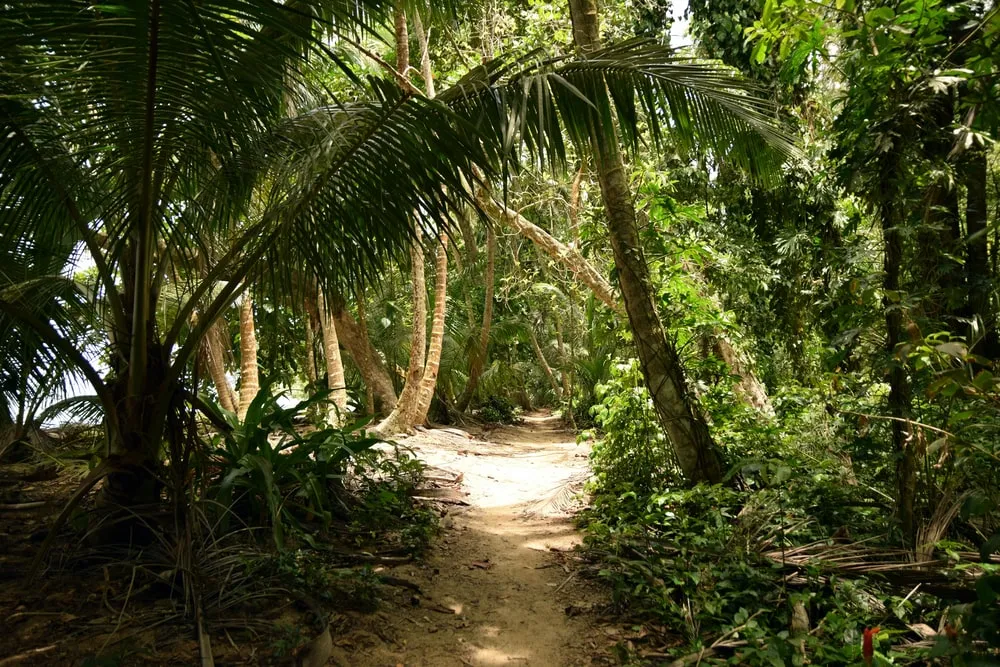
Firstly, its layout: Tortuguero is a small town on the northern Caribbean side of Costa Rica, located on a thin sandbar surrounded by rainforest. Once you’re there, you’ve got the beach, the National Park, Amazonesque canals and wildlife of all kinds. Because Tortuguero is on the small side, everything is within easy reach.
Named after the sea turtles that come there to nest, Tortuguero is a bit harder to get to (more on that shortly) than other destinations. Although it still caters to tourists, the simple distance makes Tortuguero a lot quieter than other tourist destinations. In my view, it’s the perfect place to observe wildlife (often in the early mornings) and relax in the rainy afternoons.
💡 If you’re going to Tortuguero just to see the turtles, look up when you’re most likely to see them, as this will dictate when you go. Keep in mind that sightings are not guaranteed, and there other places to see them (I saw them hatching by chance in Montezuma).

Credit: Stubborn Travel
Getting to Tortuguero
Aside from driving or taking a private shuttle, there are three main ways to get to Tortuguero from various parts of Costa Rica. Plane is fastest and most expensive, public transport the slowest and cheapest, with shared shuttles a great medium option.
I wrote a longer post going into the details on traveling from San José to Tortuguero here, including details and costs for each leg.

What is there to do in Tortuguero?
Sold? Here are some things to do once you’re there, along with some approximate costs. If you’re buying multiple from the same tour operator, you may be able to bundle and get a discount.
- group canoeing through dense rainforest canals on paddle boats (a personal highlight) ~$30
- kayaking on these same canals in your own boat. Make sure you listen to the guide on where to go, as there are caimans in the water!
- relaxing on the beach, enjoying walks or looking for turtles (remember to keep your distance) free!
- bird spotting in the jungle (go with a guide who can point them out, even when camouflaged) ~$60
- exploring the beach-bordering Tortuguero National Park (where jaguars are very rare, but there are plenty of warning signs) ~$15, which is the National Park fee
- walking around the small but charming high street – free
- going on a night walk of the park (guided) ~$20-30
- going ziplining (it’s much cheaper here than other known ziplining destinations). It rains a lot in Tortuguero, so be careful on the platforms ~$35
💡 There is a daily fee to enter Tortuguero park, around $15 per day. If you’re doing a night tour into the park, it pays to hike on the same day so you only need to pay it once.
In three days, I saw a range of monkeys (including howler), baby and big iguanas, agoutis, three caimans, three big crocodiles, toucans, herons, too many birds to list and jaguar prints. Fellow hikers saw turtles too.
Canoeing through the rainforest canals was definitely a highlight, and a must if you visit Tortuguero. The boats are non-motorised, and you help the guide paddle through dense rainforest on thin canals.

As a result, there aren’t many people on the boat (maybe six or eight). It really does feel like the Amazon. Worth noting is that it’s weather dependent — it was raining so hard for our 6am ride that we had to wait until 8am when the waters were a little more cooperative. This can be a wet ride with no cover, so beware bringing anything not waterproof.
In my experience, night walks are a little hit or miss. It really depends on what the animals feel like on that night, and of course, the guide. We saw a lot of sleeping birds, a frog, lizards, a sloth or two.
It’s quite fun trekking through the jungle at night, but there were lots of people lurking and you don’t go that deep in, which made it feel a little lightweight. And while our canoe guide deserved some sort of TripAdvisor medal, the night guide couldn’t really be bothered. This also detracted from my personal experience, unfortunately.
💡 On the way to Tortuguero National Park (which you can get to on foot from the town), you may be offered wellies to rent for a dollar or two. If it’s been raining (which is nearly always), these are pretty non-negotiable. Even if your shoes are waterproof, the depth of the puddles can be really deep after rain – you have been warned!
You should be able to cover everything in three days. You’ll probably need to leave after around three days anyway, because your clothes will be wet and refuse to dry. Which brings me to… the rain!
Rain in Tortuguero
Rain in Tortuguero isn’t just an occasional drizzle—it’s like a constant companion. It rains more than 200 days every year with an average of more than 6,000mm of rain. The rainiest months are July and December, while the driest are March, April and October.
When it rains, it really rains. It always makes me think of that Albert Hammond song (it never rains in California, it pours).
The humidity also means that when things get wet, they stay wet. For days. Seriously. Hotels and hostels have driers that can help you out if you’re stuck in a bind (for a fee). Still, I’d suggest only getting fast-drying clothes wet in the first place.
Tours usually have ponchos you can borrow. That said, I wore a poncho on top of my waterproof jacket, and the rain still found its way in every day. I did not get wet – I got soaked. The rain does add to the magic though, turning the jungle even lusher and giving the canals a misty, Amazonian vibe. Not to mention that gorgeous rain is the reason behind the trees and plants, whose leaves are sometimes taller than people.
Frequently Asked Questions
How long do you need in Tortuguero?
It depends how thoroughly you want to blend hiking and wildlife spotting with relaxing, but three days are more than enough for most people. Everything is within easy reach and the town itself is quite small. The considerations you should make is revolve around the time of the tours, which often start early in the morning. So if you want to do three different morning wildlife tours, you may need three days, even though you should be finished each one by mid morning. There are other things you can do in the afternoon, like going to the National Park or the beach.
When is high season in Tortuguero?
High season in Tortuguero typically runs from July to October. This coincides with the turtle nesting season, which is a major draw for visitors. During this time, the weather tends to be slightly drier (to clarify, driER, not dry—it still rains a lot!), and people gather to catch a glimpse of sea turtles coming ashore to lay their eggs. Low season spans the rainiest months from November to January, when downpours are more frequent and heavier. Don’t let that dampen your spirits though, as that will mean fewer crowds, lower accommodation prices, and a wilder, wetter experience.
Are hotels in Tortuguero expensive?
Of course cost is relative, but Tortuguero has a great range of options in Tortuguero. Average hotel prices will vary according to the season and type of accommodation.
The cheapest option will be a bunk in a shared hostel dorm, which will set you back $10-15. A private room at a hostel or budget eco lodge may be more like $35-50, and a mid range hotel will come in around $100 or $150 mark. If you’re looking for something luxurious, there are some fancier options that start around $200 a night and go up from there. I’ve included some inspiration below. Pricing is correct as of 2025.
Where should you stay in Tortuguero?
- Budget and under $100: Aracari Garden Hostel. This is where I stayed and I loved it. It’s a basic hostel with a glorious garden a couple of minutes away from the main street. Privates cost around $30-100 (there are a lot of different options), while shares dorms start around $15 per night. There are loads of other great budget options which cost slightly more but are still under $100 night, like Cabañas Daneysha.
- Mid-range: Options like Mawamba Lodge, Aninga Lodge and Valverde Glamping are the next level up, and close to the main part of Tortuguero. They cost around $150-200 a night (give or take according to room type and season).
- High end and luxury: if you’re looking for something a little more fancy, the eco-friendly Manatus Hotel offers room and tour packages for around $300-400 a night while supporting sustainability and biodiversity initiatives. Tortuga Lodge and Gardens is also a popular high end choice and totally unique. Part of a wider group of lodges (Boena), rooms there start around $500 and go up from there.

Can you visit Tortuguero National Park without a guide?
Yes. You’ve got three trails inside the national park perfect for anyone looking to explore solo. If you want more of a challenge, take on Tortuguero Hill (Cerro Tortuguero), although you’ll need a guide for this one. Still, you’ll get a pretty incredible view in return for your sweat.
Are there ATMs in Tortuguero?
Yes and no. There is one, but it doesn’t always work. Best to bring cash just in case, also because some places also don’t accept credit card.
Tortuguero not up your street? Discover some other things to do in Costa Rica below.
Or for something a little more adventurous, read our experience in the Amazon in Ecuador.




Leave a Reply