**Stubborn Travel articles occasionally contain affiliate links, which help to support the website at no extra cost to you. That said, I am not connected to Navimag, and this post is based on my personal experience alone.**
Planning to take Chile’s famous NaviMag ferry through Patagonia’s fjords? You’re in for an adventure. But first, you’ll need to navigate the booking process, choose the right cabin, and understand what you’re paying for.
This guide covers everything you need to know before you book, from cabin types and costs to the practical realities of sailing through one of the world’s most unpredictable regions.
FYI: I’m currently working on a full review of our experience taking the NaviMag in March 2025, and will link it below as soon as it’s done.

Credit: Stubborn Travel
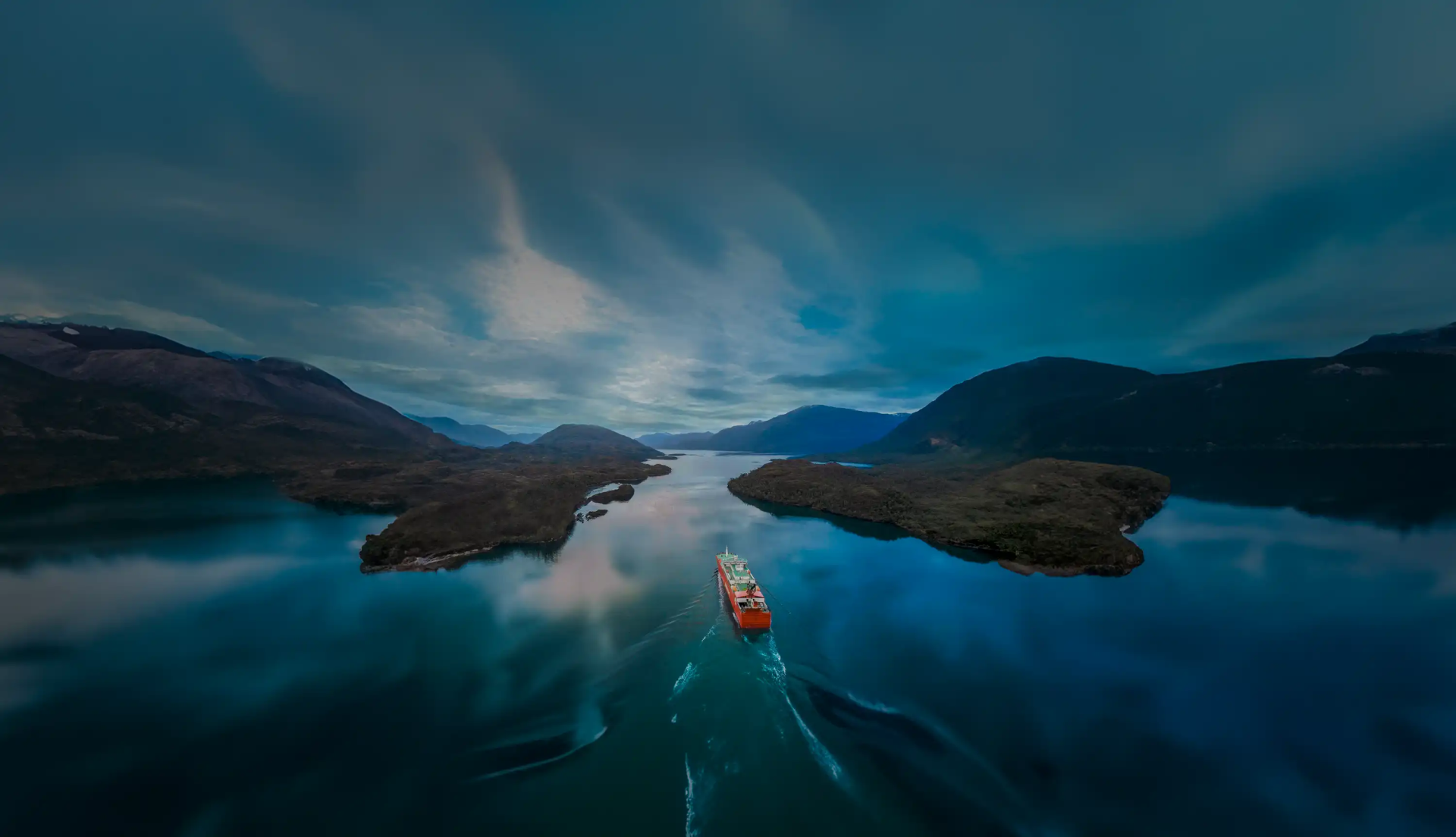
For those that don’t know, the Navimag is an infamous cargo ship that makes the roughly 1,500-kilometre journey between Puerto Montt (on the edge of Chile’s Lake District) and Puerto Natales (your gateway to Torres del Paine National Park). It’s a journey that takes you through the heart of Chilean Patagonia’s fjord system, a wilderness so remote that it remains largely unexplored. In fact, key parts on the route can only be reached by Navimag.
Let’s also cover what the Navimag is not: a cruise. There are no casinos, no formal dining rooms, and no evening entertainment beyond stargazing, a few board games and conversing. There is no internet and alcohol isn’t allowed (in theory, although I saw a few people break the rule). At its core, the Navimag is a working cargo vessel that happens to carry passengers through one of the most spectacular waterways on Earth.

The current ship, Esperanza (meaning “Hope”—rather fitting), is a Chinese-built vessel that launched the route in 2021 and can carry around 200 passengers alongside cargo trucks and goods.
The route
Between November and March (the main tourist season), the Navimag runs around once per week in each direction (give or take based on what the weather decides). During the late fall and winter, when the winds become particularly strong, it runs once or twice a month, although they won’t advertise this to tourists. It continues to run for locals who rely on the journey for both goods and transport to more remote locations.
When going from north to south, the route starts in protected waters – notably the Reloncaví Sound and Gulf of Ancud – before entering the maze of channels and fjords that make this trip so extraordinary.
You’ll sail through the deep Messier Channel (reaching depths of 1,270 meters) where you’ll see the stranded cargo ship “Capitán Leonidas” that’s been serving as a navigation beacon since the 1970s. Weather permitting, the ferry may stop at Puerto Edén, home to the last remaining indigenous Kawéskar people in Chile.
Highlights include the Angostura White, the narrowest passage of the entire route at just 80 meters wide, and the southern part of the Gulf of Corcovado, an important breeding ground for some whales (including the blue whale).
There are brief periods in the open ocean (particularly crossing the Gulf of Penas), which can get rough. But mostly, you’re sheltered by islands and mountains, making for relatively calm sailing. Of course, that’s not always the case (see next section).

The weather
Patagonian weather is famously unpredictable, and this will impact your journey. Days can be added on to the journey due to storms, or your departure may be delayed. While the Navimag is more likely to be affected by adverse weather outside the peak summer season, it can and does still happen.
My advice is that if you’re on a tight schedule, just don’t book it. Delays are super common. If you’re expecting them, that’s one thing. But if you’re not, they’ll be incredibly stressful. You can read more about this in my post on our experience taking the Navimag, but it’s a really important point, so I wanted to call it out early. Consider it a feature of traveling in one of the world’s wildest places.
A second disclaimer: the weather doesn’t just affect delays—it really shapes the experience. Don’t board expecting clear skies and perfect photo opportunities, or you’re bound to be disappointed. The beauty of the Navimag lies in embracing whatever the trip throws at you, whether that’s dramatic storms that encourage you to trade travel stories with new friends or brilliant sunshine that has you glued to the deck. Both can be magical in their own way.
Costs, room types and inclusions
The NaviMag offers several cabin categories. The lowest shared category starts around $350-400 per person if you catch it on a deal, and it goes up to almost $3000 if you’re in a premium suite solo. I’ll list the full exclusions below, but keep in mind that the price includes accommodation and food for four days (or however long the ferry takes).
The pricing is listed pretty clearly on their website and varies season by season. As you can see in the screenshot below, it’s per person based on how many people share the room.
Especially when you’re booking last minute, it’s worth getting in touch with them to check for deals. We got a good chunk knocked off our fare just for asking, and eventually, an upgrade. It was the last sail, and the ship was only around a quarter full – but there’s never harm in asking the question.

Credit: Navimag
I’ll share some photos of the cabins below, but Navimag actually has a great virtual tour tool you can use to explore the boat digitally. It’s not very well advertised, but you can find it here.
Room types
There are five main cabin categories in the Navimag. The price is per person and covers the whole journey. The range in pricing is because the cost depends on how many people share the room.
The Suite (~$1800-3000)
- Best for: 1-2 people who prioritize comfort and privacy. Travelers prone to seasickness who want their own space and bathroom access.
- Beds in a room: 1 (double)
- Bathrooms: 1
- Lockers: yes
- Window: yes

Navimag’s most luxurious option features a queen-size bed, a private bathroom, and large windows. There are two lockers by the door to keep belongings, as even though it’s a suite, the room isn’t that big.
It’s a significant price jump from the other categories, but if budget isn’t a concern and you want to experience Patagonia’s fjords in comfort, this is your best bet. Because there are only two suites available, these are often sold out.
Cabin AA (~$700-2200)
- Best for: groups of travelers wanting some privacy and scenic views without breaking the budget.
- Beds in a room: 4
- Bathrooms: 1, although there are more in the rest of the boat
- Lockers: yes
- Window: yes

Credit: Navimag

The sweet spot for many travelers, AA Cabins feature 4 beds with actual windows offering fjord views, making those long stretches of scenery much more enjoyable from your room. You’ll still share a bathroom, but having natural light and the ability to watch the landscape from bed makes this a worthwhile upgrade for many.
Cabin A (~$575-1650)
- Best for: Group and solo travelers on a budget who want privacy for sleeping, but who don’t mind socializing and spending most time in common areas rather than their cabin.
- Beds in a room: 4
- Bathrooms: 1
- Lockers: yes
- Windows: no
A cabins offer an in-between option between AA cabins and the shared C cabins. The set up is almost identical to AA cabins, but notably, there’s no window. You have to book the A cabin as a whole, so people who reserve them tend to be solo travelers or groups who know each other.
If you’re in a group, the cost difference between A and AA is relatively little – from $572 for cabin A for four days up to $716 in cabin AA, based on four people sharing. When traveling solo, that price difference is much more pronounced, as you’re looking at $1,650 for cabin A versus $2,112 for cabin AA.
Cabin A is the most cost-effective option for solo travelers who need privacy, or groups of friends who want budget accommodation without the uncertainty of sharing with strangers – although you’ll miss out on the social aspect that many backpackers love about the C cabins.
Cabin C (~$530)
- Best for: Solo backpackers and budget travelers who don’t mind sharing with strangers and want the most affordable option.
- Beds in a room: 5-8
- Bathrooms: 1, although there are more in the rest of the boat
- Lockers: yes
- Windows: no

Credit: Navimag
The true backpacker choice, cabin C is the only option where you can opt to share with strangers, and it’s reflected in the price. It’s perfect for people who want to meet fellow adventurers, though you’ll probably be spending most of your time in the common areas rather than the cabin.

Credit: Stubborn Travel
Reduced Mobility (~$1000-1650)
There are also two reduced mobility rooms, with two beds each. However, because they it’s a bunk bed set up, only one can be used at a time.
Reduced mobility rooms cost around $1000 per person based on two people sharing (~$1,650 based on single occupancy), and come with a window and accessible bathroom. Because I haven’t used the room myself for reduced mobility needs, I can’t comment on the room. However, I did find a detailed, largely positive review by TripAdvisor user Joan P that I thought it would be helpful to link here. It outlines her experience as a wheelchair user taking the Navimag in February 2025.


Inclusions
Now that you know room types and approximate cost, it pays to consider what your ticket includes and what it doesn’t. Your ticket covers:
- Accommodation for 3-4 nights (depends on which direction you take it)
- All meals
- Coffee, tea, water and snacks
- Cleaning and crew
The rest should really be taken with a pinch of salt, as people’s experiences vary greatly. Navimag do sometimes advertise activities like yoga or bingo. However when we took it and asked about both, there was no bingo and I ended up being the one who led the yoga classes (again, this is maybe because we went off season?). It was great fun, but that’s another story.
But I digress. Somewhat randomly, note that the ticket does not include a $10 boarding fee per passenger. I don’t remember paying this, but maybe something has changed. They also encourage tipping at the end of the journey, although this is very much at the passenger’s discretion.

The booking process
Reserving tickets
I’ll start by repeating one crucial point. Do not book the Navimag ferry if you don’t have flexibility with your dates when you plan to take it.
The Navimag is completely dependent on weather, and you’ll need to build significant buffer time into your schedule. Weather delays are common and can extend your journey by several days. If you have a tight flight connection or don’t like uncertainty, this might not be the journey for you.

Disclaimer out of the way, booking the ferry is refreshingly straightforward. Start by heading to the official Navimag website, where you’ll find the current sailing dates along with the ‘next sail’. Keep in mind that dates change seasonally and according to weather.

The booking system is relatively clear about pricing per cabin type, and sometimes even shows offers on the site – for example, right now I see a 20% off all cabins for next month (October, 2025). You’ll need to pay the full amount upfront when you reserve.
That said, don’t be afraid to contact Navimag directly (on sales@navimag.cl), especially if you’re booking last-minute or traveling in shoulder season. They’re surprisingly responsive, and we managed to get a good discount just by asking. People we met aboard had similar luck. The worst they can do is say no, but they seemed flexible when there’s availability. Just keep in mind that while shoulder season means better deals and more flexibility, delays are also more likely outside the peak summer months.
If you’re traveling during peak season (November-March), you’ll want to book in advance. They’re much less likely to negotiate as as the ferry only runs once per week and cabins often sell out.

Sometimes the booking pages randomly turn to Spanish, even if you have English selected as your language. Refreshing the page usually does the trick.
Communicating delays
Due to the aforementioned weather delays, make sure that you are checking your emails frequently the days before departure. This is how they tell you if there’s a delay, and people have had nasty surprises when they didn’t check their emails.
We were delayed by two days when travelling in the shoulder season, and received the notice below by email.

Credit: Stubborn Travel, Navimag
From north to south, the Navimag leaves from Puerto Montt, and there are plenty of hotels there you can stay in, including where the Navimag leaves from. At the time of writing, that’s Hotel Versalles Suites. It can change, but it’s likely to be in this area. A few things on that:
- There are loads of Hotel Versalles Suites, and their website often doesn’t work, making it tough to book direct. I’m linking the correct one here. If you want to book it yourself, make sure you book the correct one.
- That said, I wouldn’t actually stay there myself unless you really want to relax. It’s beachfront with great views, but pretty isolated and out of the way. You can take an Uber into town if you like.
- BUT these are both caveats, as I would recommend staying in Puerto Varas rather than Puerto Montt. It’s just much, much nicer (and safer), and only 20-30 minutes away. There are buses that go back and forth between the two all day, but we actually took an Uber from Puerto Varas directly to the Navimag hotel (I think it was between $10-20). The Navimag hotel is up a steep hill and a bit out of Puerto Montt, so even from there, you’ll probably need a car or bus to make your way there.

For where to stay in Puerto Natales side, I’ve written a whole guide you can view below.
On sailing day
On the day of departure, you’ll make your way to a meeting point – usually a hotel. I go into more detail of what that was like in my Navimag review post (currently WIP but it should be ready soon!), but don’t expect more than the basics. There are toilets and some seating, but that’s pretty much it.
Check in can take a few hours, as they’ll check everyone’s information, tag bags, give a paper ticket and your room number. If you want to try get an upgrade, this is the time.
Eventually, a bus will take you to the ship, where you’ll make your way to your assigned room for the fun to begin.
Final thoughts

Credit: Stubborn Travel
The NaviMag ferry isn’t a typical travel experience. It’s unpredictable, basic, and entirely dependent on Patagonia’s moods. But that’s exactly what makes it special. If you can embrace the uncertainty and focus on the journey rather than the destination, you could be in for something quite extraordinary.
I will link my own review of the Navimag as soon as I finish writing it up (spoiler: I loved it). In the meantime, here are some of the most common questions I get on the journey.
Frequently asked questions
The food is surprisingly decent for a cargo ship! Meals are served buffet-style, and there’s plenty of it. Expect hearty, simple fare – think stews, roasted meats, rice, vegetables, and fresh bread. The crew takes pride in the cooking, and considering you’re in the middle of nowhere, it’s much better than you’d expect. Coffee, tea, water and fresh fruit are available on tap throughout the day.
They can accommodate most dietary requirements if you let them know when booking. I saw both vegetarian and vegan options available, and they’ll work with you on other restrictions. I was even surprised that they had oat milk for coffee in the morning. That said, don’t expect gourmet alternatives – they’re more likely to try adapt what they’re already making. The earlier you tell them about specific needs, the better they can prepare.
Can I bring alcohol?
No. Alcohol isn’t sold onboard and bringing your own is against the rules. I do know some passengers brought their own, but it was always consumed in the secrecy of the C cabins. My impression is that the crew generally turns a blind eye as long as you’re responsible and discreet. Don’t expect to have a drink with your meals in the dining room, for example.
Keep in mind that it may also not be a good idea to not have your wits about you, as the ship can be seriously windy, but it’s worth being outside and trying to absorb everything you can.
What should I pack for Patagonia weather?
I’m working on a specific post about this, but layers are your best friends. Comfortable walking shoes with good grip are essential, and don’t forget sunscreen, as the sun (if you’re lucky enough to see it) reflects strongly off the water.
Is there WiFi/cell service?
No WiFi, and cell service is virtually non-existent for most of the journey. There was someone with Starlink on our journey, but it was clunky and in the way. The ship can send emergency communications if needed, but I would consider this an opportunity for a good digital detox.
Is it suitable for families with children?
Absolutely, but you’ll want to keep a good eye on them. The dining rooms are secure, but I would want some sort of leash for the outside decks. The rails are adult-sized, and it can get very windy. I had vertigo a few times looking down at the sea.
That said, the slow pace and lack of internet could actually create great opportunities for family time. Just prepare for the possibility of delays, which might affect school schedules or other commitments, and bring entertainment. Kids get 20% off the fare.
Can I bring my car/motorcycle?
Yes, for an additional fee. You’ll need to book this in advance, and once onboard you won’t have access to your vehicle during the journey. Make sure you have everything you need in your luggage for the trip.




Leave a Reply